

The Gap Between Impulse and Action: How to Stop Sabotaging Your Trading
Every trader knows what the right move is. The problem is doing something else entirely. Here’s why impulse control is the missing piece of your trading edge.

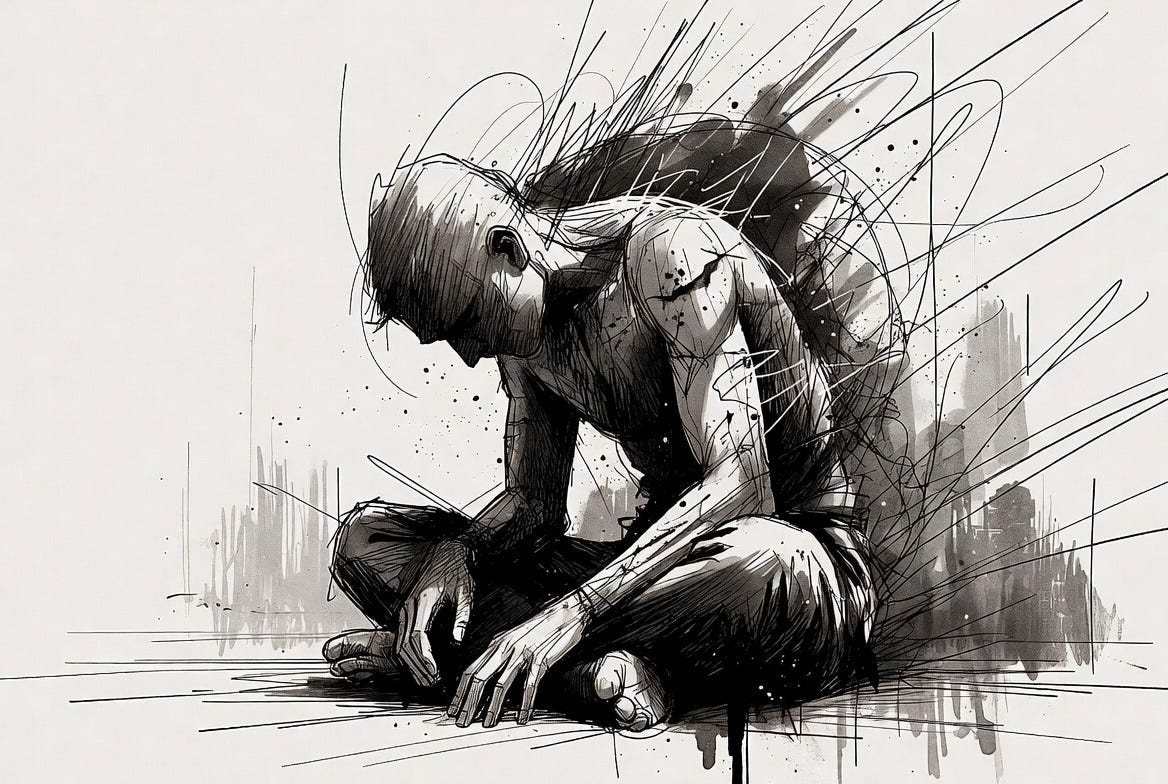
There’s a moment that plays out in every trader’s life, probably several times per day. You see a setup. You know genuinely know that it is not your trade. The conditions are not right. The confluence is missing. The risk reward does not make sense. And yet your finger hovers over the button. Your breath gets shallow. Something inside you whispers just one more or what if this time is different or I deserve this.
Then you click.
This is impulse. And if you’re serious about becoming a consistently profitable trader, you need to understand something about impulse that most traders never grasp: the impulse itself isn’t the problem. The problem is the gap. That tiny, invisible gap between impulse and action where all the magic happens. Or rather, where all the destruction happens.
Most traders try to eliminate impulses entirely. They white knuckle through their trading sessions, fighting urges, flexing their willpower like a muscle. And they fail. Because impulses do not disappear. They are hardcoded into your nervous system. Your brain is a prediction machine, and when it sees opportunity or what it thinks is opportunity it generates urges. That is not a flaw. That is just biology.
What you can control, what you must control, is the space between the impulse and the action. That is where your trading career is won or lost. Not in finding the perfect strategy. Not in having the best indicators. In that three second window between I want to and I am doing it.
The Neuroscience of Why You Can’t Stop
Before we get into solutions, let us talk about why this is so hard. Because it is hard. You are not weak for struggling with impulse control. You are human.
Your brain has two systems at war when you’re trading. System One is fast, automatic, and emotional. It’s the part that sees the green candle and feels the rush of FOMO. It’s the part that watches a losing trade and feels the panic rising. System One doesn’t think — it reacts. It operated this way for millions of years before you ever opened a trading account, and it’s not going to change just because you learned about risk reward ratios.
System Two is slow, deliberate, and rational. It is the part that calculated your position size before the trade. It is the part that wrote down your rules this morning. It is the part that knows you should not take this setup because the daily RSI is overbought and you have already taken two trades today.
When impulse control fails, System One won. Your fast brain beat your slow brain. And here’s the thing: it happens in milliseconds. By the time System Two wakes up and says “hey, maybe don’t,” you’ve already clicked the buy button.
This is why willpower doesn’t work. You’re trying to use System Two to overpower System One in real time, during the heat of the moment. That’s like trying to stop a freight train by standing in front of it. You’re not going to win that fight.
Instead, you need to restructure your environment and your habits so that System One never gets the chance to take over. You need to make the right choice the easy choice. And that starts with understanding what triggers your impulses in the first place.
The Real Triggers Aren’t What You Think
Most traders think their impulses are caused by the market. The market moved. There was a news event. A stock gapped up. They saw a green candle and they wanted in.
But that’s not the real trigger. That’s just the excuse.
The real triggers are internal. They are emotional. They are about what you are feeling before the market even does anything. And once you see these triggers for what they are, you can start to manage them.
Boredom. This is the silent killer of trading accounts. You have been watching the screen for two hours. Nothing is happening. Your brain is craving stimulation. And then look! there is a tiny bounce on a stock you have been watching. Your brain pounces. Finally, something to do. You take a trade not because the setup is good, but because you are bored. This is impulse masquerading as opportunity.
Loneliness. Some traders are isolated. They sit alone all day, making decisions in a vacuum. When you have been alone with your thoughts for hours, the market becomes a companion. You start trading to feel connected to something. You take trades not because they are high probability, but because trading makes you feel like you are doing something meaningful.
Anger at yourself. You had a bad trade this morning. You are down $500. And now there is a familiar voice in your head saying make it back. You have already blown your daily loss limit, but that voice does not care about rules. That voice cares about feeling better. And so you take another trade. And another. This is revenge trading, and it is impulse wearing a mask.
Fear of missing out. The market is moving. Everyone else seems to be making money. You are sitting on your hands and it hurts. That hurt is impulse telling you to join the party. But the party is going to end, and you are going to be the one holding the bill.
The desire to feel productive. You woke up today and have not accomplished anything yet. Your to do list is empty. And here is the market, offering you an easy win. Just a quick trade. Just a small one. You will feel productive. You will feel like you did something today. Except you did not do something useful. You made a decision that did not need to be made.
These are the real enemies. Not the market. Not volatility. Not even your own impulses, specifically. But the unmet emotional needs that your impulses are trying to solve. Bored, lonely, angry, afraid, empty. When you trade from those states, you’re not trading. You are self-medicating.
And that never ends well.
The Architecture of Impulse Control
Now that you understand why impulses happen, let’s talk about how to control them. Not eliminate.
Control.
There’s a difference.
Eliminating impulse is impossible. Controlling it means creating systems, environments, and habits that make the right choice easier than the wrong building walls around your choice. It is about decision making process so that when System One charges in looking for trouble, it finds a locked door.
Here’s what that looks like in practice:
Rule number one: Remove the button.
If you are trading on a platform where taking a trade is one click, one tap, one impulsive moment away from disaster, you need to change your setup. I am not saying you need complex order entry systems. That is its own form of self sabotage. But you need enough friction that the impulse has to pause.
Some traders use a physical rule: they write down the trade on paper before entering it. They have to describe the setup, the entry, the stop, the target, and the position size. By the time they’ve written all that down, the impulse has usually passed and System Two has caught up.
Others use a time rule: if they feel the urge to trade, they set a timer for fifteen minutes. They walk away from the screen. They get a glass of water. They do something, anything, that breaks the pattern. Usually, when they come back, the setup that looked so compelling fifteen minutes ago either has played out or no longer meets their criteria.
The point is simple: don’t let impulse and action be immediate neighbors. Put something in between them. A pause. A friction. A moment where System Two can catch up.
Rule number two: Audit your emotional state before you trade.
Before you enter any trade, before you even look at charts, check in with yourself. How are you feeling? Be honest.
If you’re bored, lonely, angry, scared, or empty, don’t trade. I mean that. Close the platform. Go for a walk. Call a friend. Do something that addresses the actual feeling instead of using the market as an emotional crutch.
This sounds soft. It’s not. This is hard core risk management. You’re not emotionally stable enough to make decisions when you’re in a compromised state. You know this already. You’ve made trades while bored, angry, or desperate that you wouldn’t make if you were feeling fine. You know it’s true.
So check in. Before you trade, ask yourself: Am I in a state where I can make clear decisions? If the answer is anything other than an unequivocal yes, do not trade. There is always another setup. There is never another account if you blow this one.
Rule number three: Pre-commit to your rules.
The worst time to decide whether to take a trade is while you are looking at the trade. That is System One territory. That is where impulses win.
Instead, make your decisions before the market opens. Sit down in the morning, before anything has happened, before any setups have appeared, before your emotions have been triggered by movement — and write down your rules for the day.
How many trades will you take? What conditions must be present? At what point will you stop trading? What is your maximum daily loss? What will you do if you feel the urge to overtrade?
Write it all down. Make it specific. Make it real.
Then, during the trading session, your job is not to decide whether to take a trade. Your job is simply to observe whether the trade in front of you meets your pre-committed criteria. That is a much easier task. You are not fighting impulse. You are just comparing. Does this match what I wrote this morning? Yes or no.
When you frame it that way, impulse loses its power. You’re not denying yourself something you want. You’re just being a good employee, following the instructions you gave yourself earlier.
Rule number four: Design your environment for success.
Your environment is always working for or against you. If your trading platform is open on one screen and your phone is within reach, you’re creating an environment that supports impulse. If your browser has fifty tabs open and you’re getting notifications from financial news, you’re creating an environment that overloads your System One and makes it more reactive.
But if your trading setup is clean and focused, if you’ve closed everything except what you need, if you’ve silenced notifications, if you’ve removed the temptation to click around, you’re creating an environment where the right choices are easier.
This applies to more than just your screen. What are you doing before you trade? If you’re scrolling Twitter or reading news about the market, you’re already amped up before you start. Your brain is in a reactive state. But if you spend ten minutes before trading in quiet contemplation, reading, meditating, or just sitting, you’re creating a baseline of calm that makes impulse easier to manage.
Your environment shapes your impulses. Design it on purpose.
What to Do When You Fail
Here’s something important: you will fail at this. Not might fail. Will fail. You’ll have days where impulse takes over and you make trades you shouldn’t. You’ll have weeks where you break your rules repeatedly. You’ll blow a stop or chase a candle or take a size that was too big.
And when that happens, what matters isn’t the failure itself. What matters is what you do next.
First, stop. Right now. Close the platform. Walk away. The impulse is still there. It’s always there. But you can choose not to act on it. The moment you recognize what’s happening, you’ve already won half the battle. The impulse doesn’t have to become an action.
Second, forgive yourself. This is crucial. Impulse control isn’t about being perfect. It’s about building a system where perfect isn’t required. When you slip up, beating yourself up serves no purpose. It actually makes things worse, because now you’re adding shame to the emotional mix, and shame is just another trigger for more impulsive trading.
Third, review what happened. Get out your journal and write down what triggered the impulse. What were you feeling before the trade? What was the setup? Did it meet your pre-committed criteria? What would you do differently next time?
This review process is how you close the loop. Impulse control isn’t a destination you reach. It’s a practice you get better at over time. And you get better at it by paying attention, by learning from your failures, and by continuously refining your systems.
The Long Game
Here’s what nobody tells you about impulse control in trading: it’s not really about trading.
It’s about life. The same patterns that destroy your trading account, acting without thinking, chasing short term relief, avoiding uncomfortable emotions, using external things to fill internal holes, are the same patterns that show up in relationships, in careers, in health.
The trader who masters impulse control doesn’t just become a better trader. They become a better person. More patient. More deliberate. More able to sit with discomfort without needing to act on it. More capable of making decisions based on long term values rather than short term feelings.
This is the hidden gift of trading. The struggle with your own mind, the battle between impulse and discipline, that struggle, if you engage with it honestly, transforms you. It makes you stronger. It makes you wiser. It makes you more yourself.
And here’s the beautiful part: you don’t have to be perfect. You just have to be better than you were yesterday. One more moment of pause between impulse and action. One more time you wrote down your rules before trading. One more day you recognized the boredom and chose to walk away instead of chasing.
These small wins compound. Over time, they add up to something remarkable: a trader who can sit in front of the screen and feel nothing. Not boredom. Just calm observation. No urge to act. No fear of missing out. No need to prove anything. Just a person, following a process, executing a plan.
That’s the goal. That’s what impulse control builds toward. Not suppression of your impulses, but mastery of yourself. The ability to feel the impulse, recognize it for what it is, and choose your response instead of reacting automatically.
It takes time. It takes practice. It takes failures and learnings and more practice. But it’s available to anyone willing to do the work.
The market will always be there. The impulses will always be there. But you — if you build the gap, if you create the systems, if you commit to the practice — you can learn to respond instead of react.
That’s the edge. That’s the edge that can’t be taken from you. Not a strategy. Not a secret indicator. Just the quiet power of choosing your actions instead of letting your impulses choose them.
Trade calm. Trade deliberate. See you next Tuesday.
I love this post! What I have found about my own impulses is the stress I have with my kids carrys directly onto my charts. Not good. Hard to work on it. But it also forced me to realize: there comes a point where not trading is the most profitable thing I can do.